Bitcoin Down 30%, But Nobody's Panicking: What February 2026 Actually Tells Us
Bitcoin Down 30%, But Nobody's Panicking: What February 2026 Actually Tells Us
Date: 09 Feb 2026
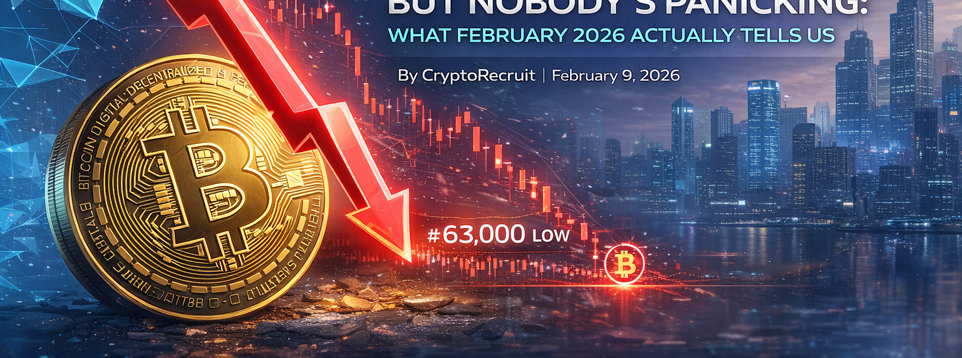
Bitcoin just had its worst week since 2022. Down 30%. Trading below $63,000. The headlines are doing their predictable thing: "Crypto winter is back!" "The bubble finally popped!" "We told you so!"
But if you're actually paying attention to what's happening beneath the price action, you'd see something very different.
This isn't 2022. Not even close.
The Real Story: Institutions Aren't Leaving, They're Building
While retail investors panic-sell and crypto Twitter melts down, BlackRock, the world's largest asset manager—just posted multiple Managing Director positions for crypto at $270,000-$350,000. Not junior roles. Leadership positions requiring 12+ years of digital asset experience.
They're hiring for stablecoins. Tokenization. Infrastructure. The boring stuff that actually matters.
The same week Bitcoin crashed, their job postings went live. That's not a company hedging bets. That's a company positioning for what comes next.
And they're not alone. Over 112 new blockchain positions were posted in early February. DeFi risk managers. Protocol researchers. Infrastructure engineers. The kind of roles that survive market cycles because they're building the rails, not riding the hype.
The Layoffs Everyone's Talking About
Yes, Gemini cut 200 jobs 25% of their workforce and pulled out of the UK, EU, and Australia. The tech sector saw nearly 30,000 layoffs in January alone.
But here's what the headlines miss: These cuts are surgical, not systemic.
Gemini's announcement included a fascinating note about AI transforming their productivity needs. They're not cutting because they're dying, they're cutting because exceptional engineers using AI can now do the work of entire teams. They need fewer people, but the people they need are exponentially more valuable.
The companies folding or slashing headcount? Most of them shouldn't have raised money in the first place. No product-market fit. No sustainable revenue. Just "blockchain is cool" business plans that couldn't survive reality.
The companies thriving? They kept lean operations, focused on real products, and built actual revenue streams. Now they're using this downturn to hire talent that was previously locked into golden handcuffs elsewhere.
What's Actually Different This Time
Infrastructure is real. Bitcoin and Ethereum ETFs aren't going away. BlackRock doesn't launch products and then abandon them when prices dip. The institutional rails are built and operational.
Regulatory clarity is emerging. The GENIUS Act established federal stablecoin frameworks. Multiple countries are using clear regulations as economic development tools to attract crypto companies. The "regulatory uncertainty" excuse is dying.
Revenue exists. DeFi protocols are generating real fees. Exchanges have sustainable business models. The top projects aren't burning through VC cash hoping for a token pump, they're profitable or have clear paths to profitability.
The talent matured. The people building in February 2026 aren't tourists. They're the survivors from 2022-2023 who kept shipping when everyone else quit. They understand bear markets. They know how to build without hype.
This is what crypto looks like when it grows up. Less exciting. More sustainable. Actually useful.
The Geographic Shift Nobody Notices
58% of crypto companies now operate fully or partially remote across 120+ countries. But there's a deeper shift happening.
While US companies navigate uncertain regulatory terrain, Singapore, Hong Kong, and EU countries are aggressively recruiting crypto talent and capital with clear frameworks. Companies aren't just going remote, they're strategically relocating operations to jurisdictions that want them.
For builders, this means your location matters less than ever. For policymakers, it means talent and capital flow to clarity, not chaos.
What the Market Is Actually Saying
Price volatility will continue. Bitcoin might hit $55,000 or $100,000, nobody knows. But the fundamentals tell a different story than the charts.
Institutional capital is deploying, not retreating. Infrastructure companies are hiring, not cutting. Serious projects are building multi-year roadmaps while weak projects fold.
The market is doing what markets do: Separating performance theater from real value. The projects surviving this downturn are the ones that will define crypto's next phase.
What This Means Right Now
If you're building: This is your opportunity. Talent is available. Competitors are distracted. The noise level dropped. Ship while everyone else is paralyzed by price action.
If you're investing: Look at who's hiring and what they're building. Companies expanding during downturns typically emerge stronger. Follow institutional money, not retail sentiment.
If you're job hunting: The companies hiring right now are the ones with conviction and capital. They're not betting on a quick recovery, they're building for 2027 and beyond. Those are the teams you want to join.
If you're watching from the sidelines: This is what adoption looks like. Not smooth. Not linear. Definitely not comfortable. But undeniably happening.
The Bottom Line
February 2026 isn't about surviving the crash. It's about recognizing that price volatility and fundamental progress aren't the same thing.
Bitcoin is down 30%. Meanwhile, the world's largest asset manager is hiring crypto leadership at $350K. Institutional infrastructure is operational. Regulatory frameworks are clarifying. Real companies are building real products.
The market will do what it does. But if you're only watching the price, you're missing the story.
The weak projects are dying. The strong ones are accelerating. And the talent? They're not panicking, they're positioning.
Which, honestly, tells you everything you need to know.
Ready to hire smart — or be hired into something big?
Let’s talk. HERE
No fluff. No filters. Just honest recruiting in Web3.
Still struggling to stand out?
Neil offers one-on-one career consultations to help you get clear, get seen, and get hired. HERE
Looking for a job? Reach out to us HERE
Back to News Share to LinkedIn
 Share to Twitter
 Share to Facebook
 Back to news